Advanced Engineering Services

Advanced Engineering Services

  • Cis-Lunar Flight Dynamics
  • Flight Dynamics: Spacecraft Swarms
  • Satellite Swarm Mission Design
  • USAF Multi-Mission Satellite Operation Center
  • Multi-Mission Operation Center
  • NASA Space and Near Earth Network
  • NASA Deep Space Network
  • CubeSat Engineering
  • Robotic Free Flyers
CIS Lunar Flight Dynamics

Cis-Lunar Flight Dynamics

Metis specializes in cis-lunar and planetary mission orbit design, balancing science goals with spacecraft and operational constraints. Recent accomplishments include developing and operating the Flite/FDS Lite flight data system for NASA’s ACS3 (Advanced Composite Solar Sail System) mission—automating orbit determination (OD) solutions, OEM generation, solar sail attitude modeling and pointing algorithms in STK, report/graph automation, ephemeris prediction from ODTK, and CARA uploads—creating an unprecedented equatorial lunar orbit for the DARE mission, analyzing cycler orbits for Phobos and Deimos flybys, and prototyping tools for relative motion in eccentric, high-altitude orbits. Our expertise supports full life-cycle engineering, from transfer trajectories to precise orbit estimation and navigation in challenging gravitational environments.
Spacecraft Swarms

Flight Dynamics: Spacecraft Swarms

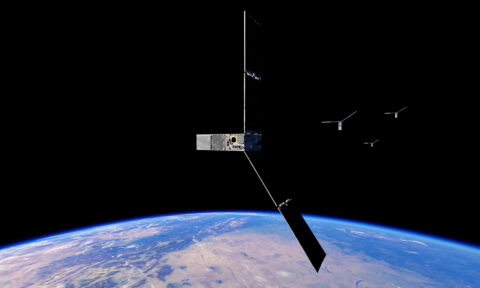
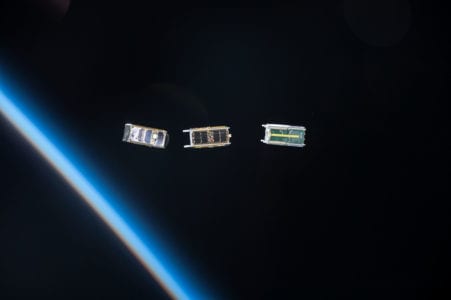
Metis collaborates with NASA to analyze and customize orbit characteristics for mission requirements, focusing on swarms of interacting spacecraft. Key achievements include developing mission simulations for multi-spacecraft swarms, leading flight dynamics and mission operations for the Starling swarm mission and optimizing HelioSwarm orbits to reduce maximum separations while addressing communication limitations. These capabilities enhance swarm coordination, relative motion modeling in perturbed environments, and overall mission efficiency for complex space operations.

NASA Starling Mission

Satellite Swarm Mission Design

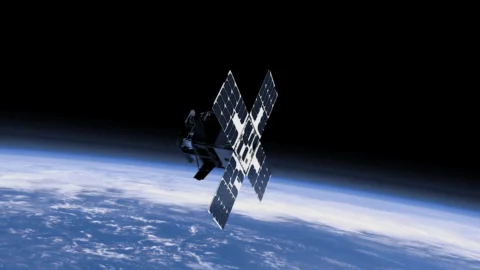
Metis leads flight dynamics and mission design for NASA’s Starling mission, a technology demonstration with four 6U CubeSats in low Earth orbit advancing autonomous swarm capabilities. We manage orbit determination, relative motion modeling, maneuver planning, and autonomous swarm maintenance experiments using the Starling Flight Dynamics System, while overseeing ground data systems development, integration, testing, and operator certification. For HelioSwarm, Metis pioneered trajectory optimization using lunar gravity assists and resonance orbits in high Earth orbit for a hub-and-spoke swarm of one Hub spacecraft and eight Node SmallSats. Our work enables precise multiscale measurements of solar wind turbulence, relative navigation, and coordinated operations for unprecedented 3D plasma dynamics observations. These efforts support full life-cycle swarm engineering from concept to on-orbit execution.

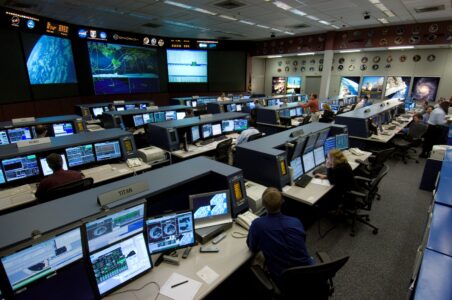
Multi Mission Operation Center

USAF Multi-Mission Satellite Operation Center

Metis’ personnel provided systems administration, systems engineering, network engineering and software engineering to support USAF ground system development and sustaining engineering.

Metis made significant improvements to MMSOC v. 2.0 software architecture, including development of core MPS Command Builder code which needed to be modified to support critical launch activities; development of a modular design for the User Desktop which allows for additional products to be easily added to the drop-down menu; and development of scripts to automate CM processes saving numerous program labor hours.

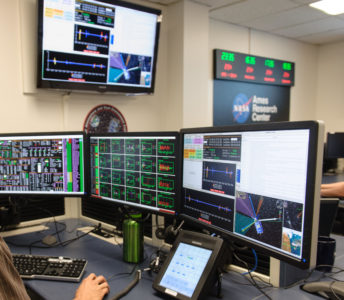
Multi-Mission Operation Center at NASA Ames Research Center

Multi-Mission Operation Center

Metis supports systems administration, engineering, network, and software support to NASA Ames’ MMOC for cost-effective, reconfigurable resources across multiple missions. We coordinate customer needs, plan upgrades, and ensure NASA compliance for projects including Starling, BioSentinel, VIPER lunar rover, IRIS solar imaging spectrograph, and Astrobee robotic free-flyers. Our modular infrastructure management covers networks, security backups, monitoring via Nagios/Splunk, and tools like Confluence/Jira/MatterMost, enabling yearly authorization for agile multi-mission operations in low-Earth orbit, lunar, and heliophysics environments.

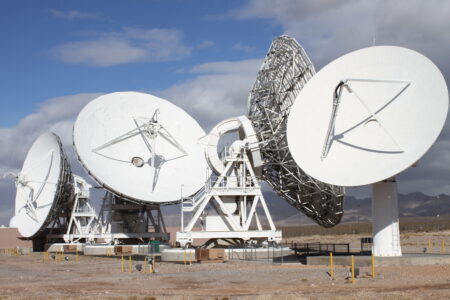
NASA Space and Near Earth Network

NASA Space and Near Earth Network

Metis sustains software for NASA’s Space and Near-Earth Networks for telemetry, tracking, commanding, data downlink, and radiometric services in on-orbit operations. At Wallops, our software engineers develop and maintain ground systems and scheduling software for operations and sustainment. At White Sands, we provide ground station integration and test, IT administration, cybersecurity, and system upgrades, enhancing network reliability and security, and DTE scheduling operations.

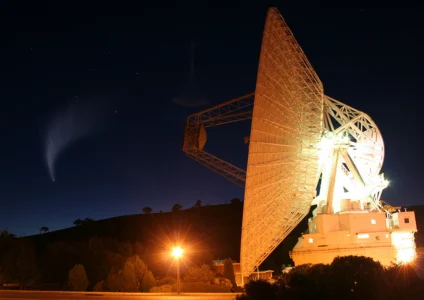
Deep Space Network

NASA Deep Space Network

Metis provides network operations support to NASA’s DSN, delivering expertise in infrastructure, project interfaces, mission planning, critical event planning and training for Network Operations Administrators and Network Operations Project Engineers . Key achievements include supporting critical missions like Voyager high-power uplinks, Europa Clipper, Artemis and Artemis 2, and HERA; 24/7 operational support for critical mission, deploying software upgrades; conducting anomaly investigations, root cause analyses, and innovations for telemetry retries. These capabilities minimize downtime, optimize performance metrics, and ensure reliable deep space communications for maximized mission data return.

CubeSat Engineering

CubeSat Engineering

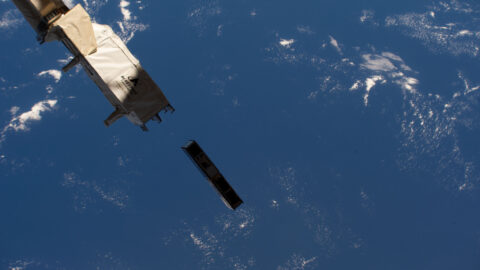
Metis supports AFRL’s Space Vehicles Directorate and NASA Ames across CubeSat life cycles, from concept through launch and operations, including TechEdSat missions for re-entry experiments and radiation shielding demos. We develop formation flight requirements, ConOps, ADCS integration, simulation code for attitude control and orbit determination, mechanical designs for TES-19 folding heat shields, latching mechanisms, TPS components, and trade studies on radiation detectors, shielding materials, and sun sensors. Our propulsion and systems engineering includes requirements, performance evaluations, product selection, innovative concepts like hosted payloads and DESPINA X-Ray PNT sensors, with integrations, environmental testing, and collaborations for missions across multiple TES vehicles.

Robotic Free Flyers

Robotic Free Flyers

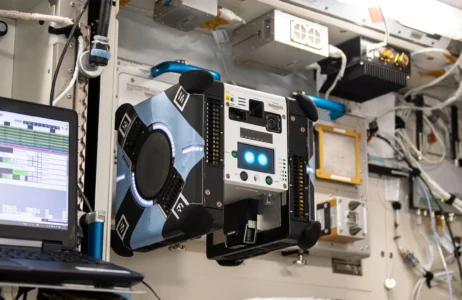
Metis engineers supported NASA’s SPHERES and Astrobee robotic free-flyers on the ISS, providing integration, testing of ground and flight units, in-flight operations, and ground data system management. We managed hardware prototyping in NASA Ames’ small satellite lab, including SPHERES propulsion system replacement and return to flight. For Astrobee, we supported hardware/software integration and Safety Data Packages while advancing positioning algorithm development  with collaborative SLAM, sensor fusion, and autonomous mapping validated with real ISS data and hardware prototypes.